


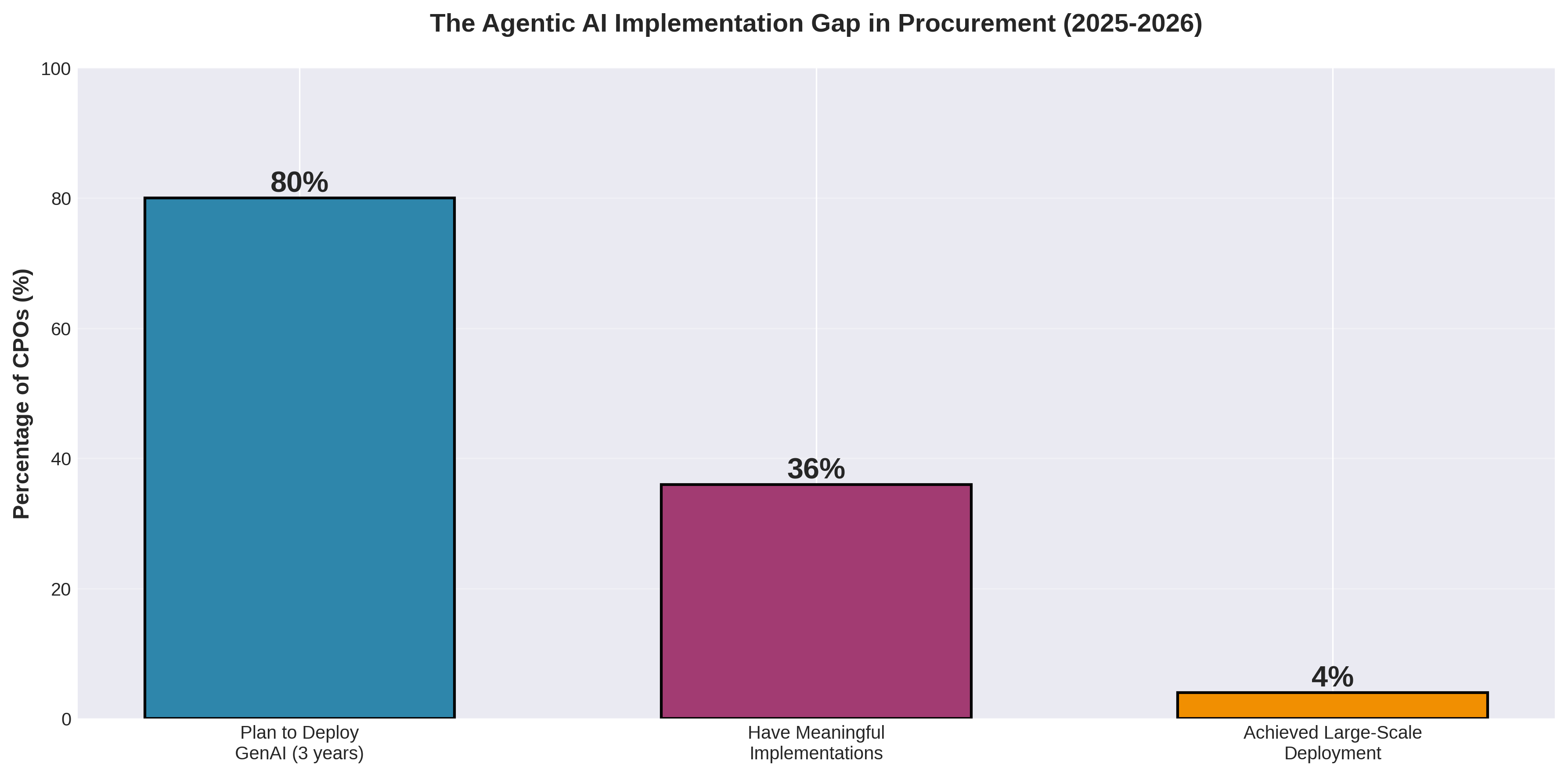
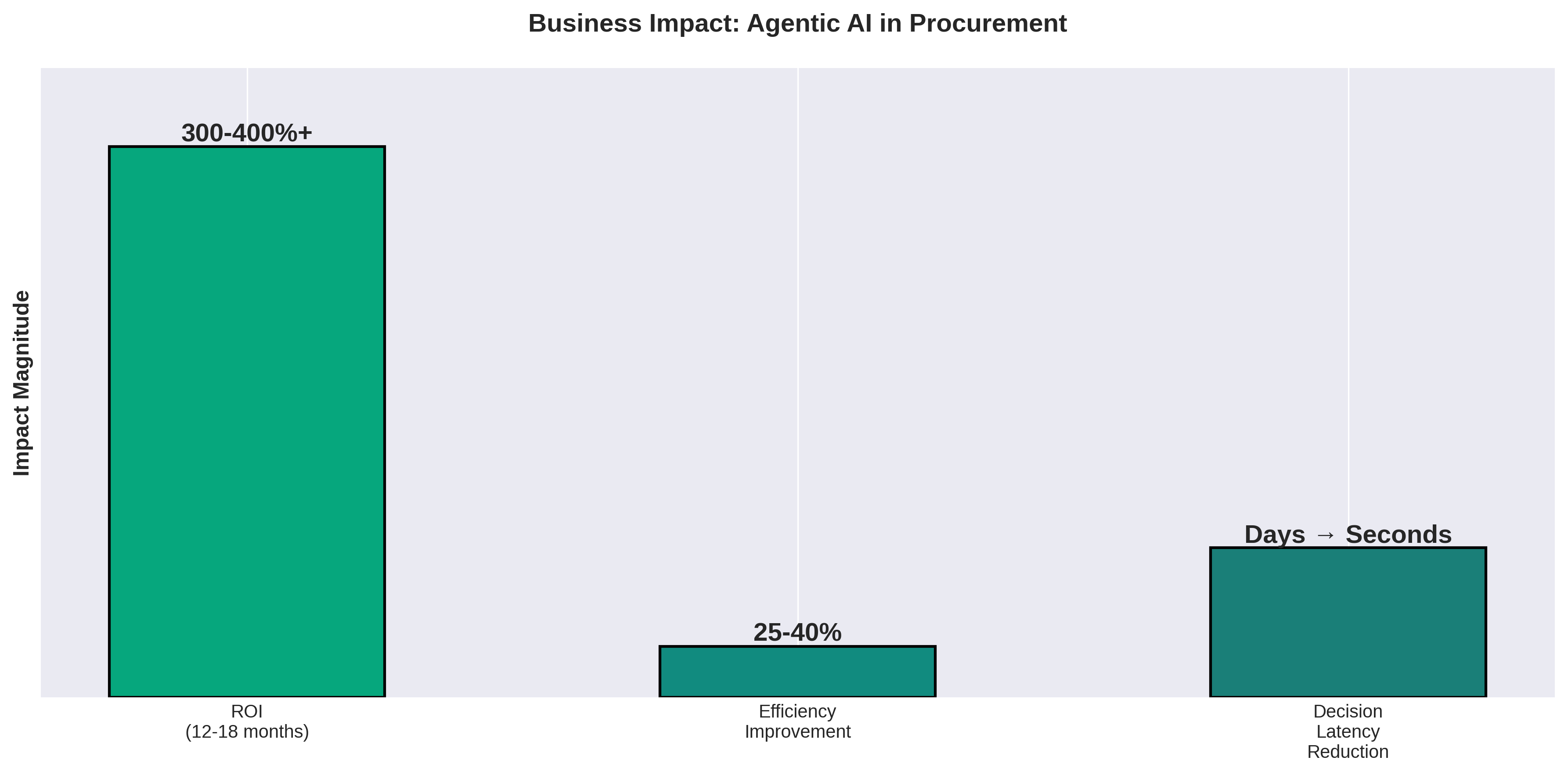
The average procurement team can automate 50% to 80% of its current workload using agentic AI, driving efficiency improvements of 25% to 40% . In 2026, agentic AI in procurement is not just a theoretical concept; it is an operational reality. However, while 94% of procurement executives now use generative AI at least weekly, only 4% have achieved large-scale deployment . This guide covers the critical decision matrix for supply chain leaders: identifying exactly which procurement processes to automate with AI agents and which must remain human-driven to preserve strategic value.
What Is Agentic AI in Procurement?
Agentic AI in procurement is an autonomous artificial intelligence system capable of perceiving supply chain environments, making sourcing decisions, and executing multi-step workflows to achieve specific business goals. Unlike traditional robotic process automation (RPA) which follows rigid rules, agentic AI can adapt to exceptions, summarize complex contracts, and generate contextual responses to supplier inquiries .For supply chain management, the distinction between traditional automation and agentic AI is profound. While traditional tools might flag an invoice discrepancy, an AI agent can identify the error, cross-reference the original contract terms, draft an email to the supplier requesting clarification, and queue the revised invoice for human approval.
The ROI of Procurement Automation in 2026
Procurement automation delivers an average return on investment (ROI) of 300% to 400% within the first 12 to 18 months of deployment . This rapid time-to-value is driven primarily by the reduction in decision latency—shrinking the time required to process data from days to mere seconds .
According to a 2025 Deloitte survey of Chief Procurement Officers, the primary value drivers for generative AI adoption are enhanced analytics and decision-making (67.68%) and productivity gains (49.43%) . The challenge is no longer proving that the technology works; the challenge is determining where to deploy it first.
What to Automate: The Case for Operational Efficiency
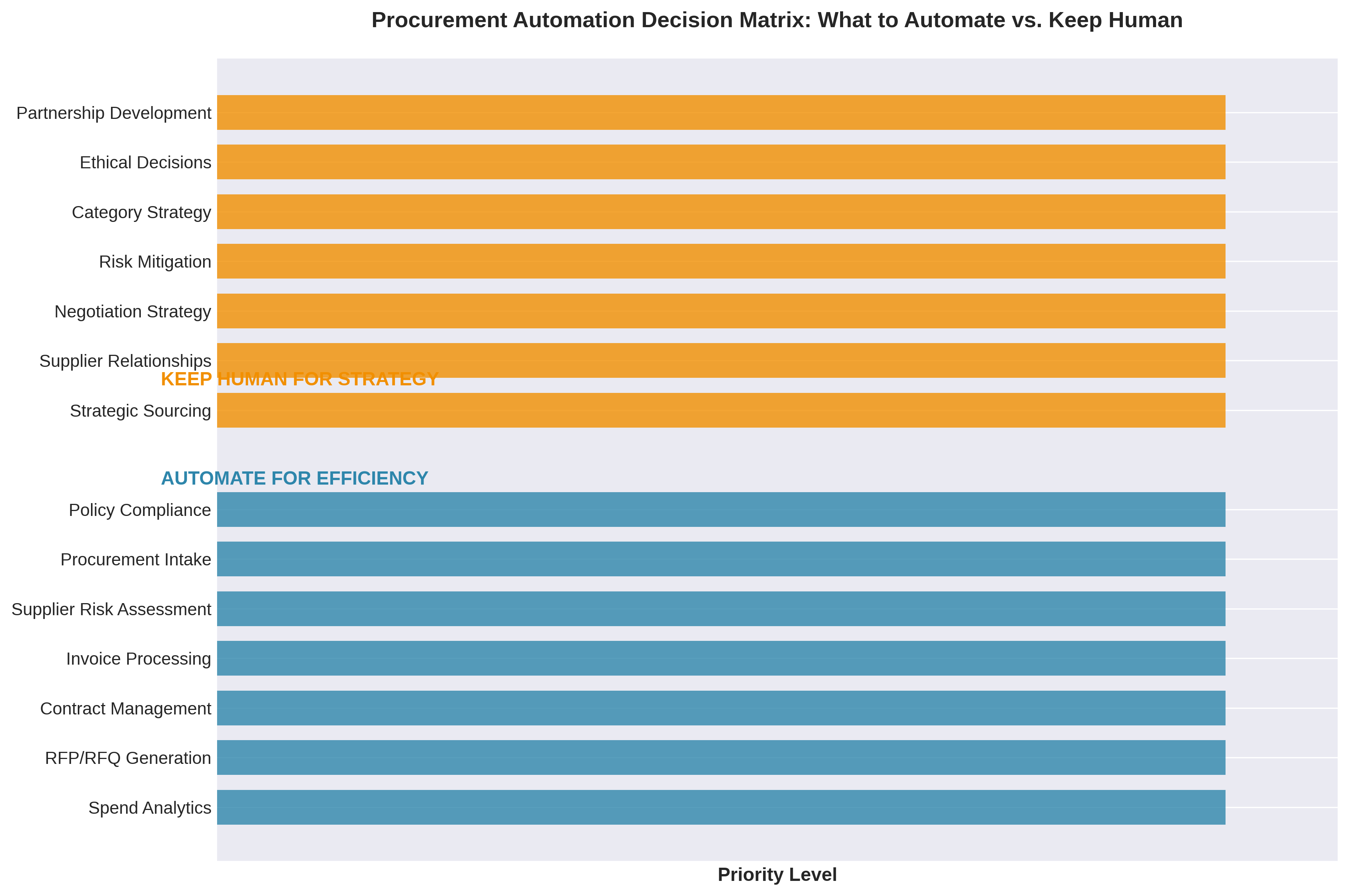
If a procurement task is repetitive, data-heavy, and relies on pattern recognition, it should be automated. AI agents excel at processing massive datasets without fatigue, making them ideal for the operational heavy lifting that historically consumed up to 80% of a procurement professional's day.
1. Spend Analytics and Classification
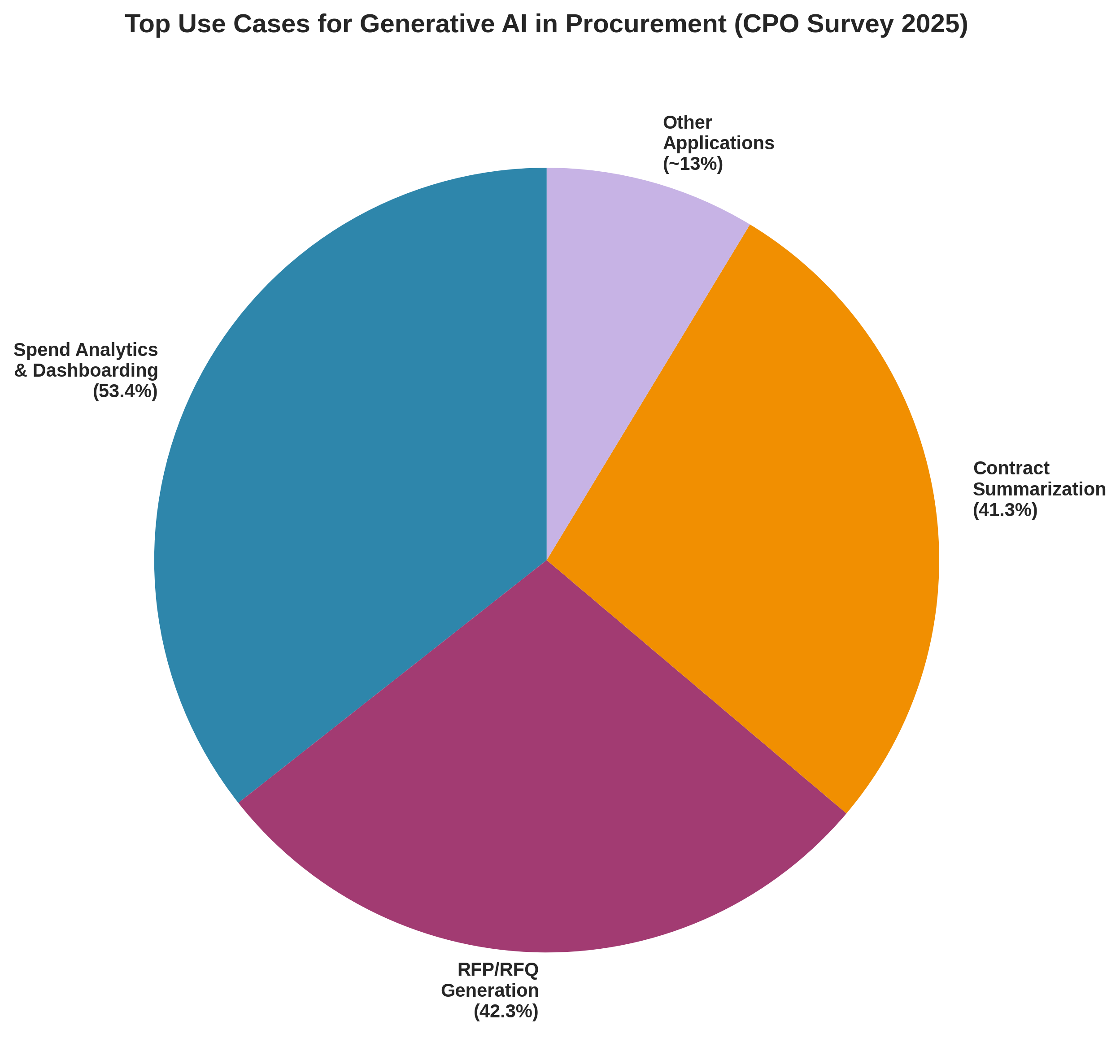
Spend analytics is the process of collecting, cleansing, classifying, and analyzing expenditure data to decrease procurement costs and improve efficiency. This is the top use case for AI in procurement, with 53.4% of CPOs prioritizing it . AI agents can automatically classify spend across thousands of categories, identify maverick spending patterns in real-time, and surface consolidation opportunities that human analysts might miss in massive datasets.
2. RFP and RFQ Generation
RFP generation involves drafting comprehensive requests for proposals to solicit bids from potential suppliers. AI models can now draft structured RFPs by analyzing past successful documents, current market conditions, and specific stakeholder requirements. This reduces the drafting time from weeks to hours.
3. Contract Summarization and Metadata Extraction
Contract management AI involves using natural language processing to automatically extract key obligations, pricing terms, and risk clauses from complex legal documents. AI can parse a 100-page supplier agreement in seconds, highlighting non-standard liability clauses and tracking renewal dates to prevent auto-renewal of obsolete services.
The Data Readiness Barrier
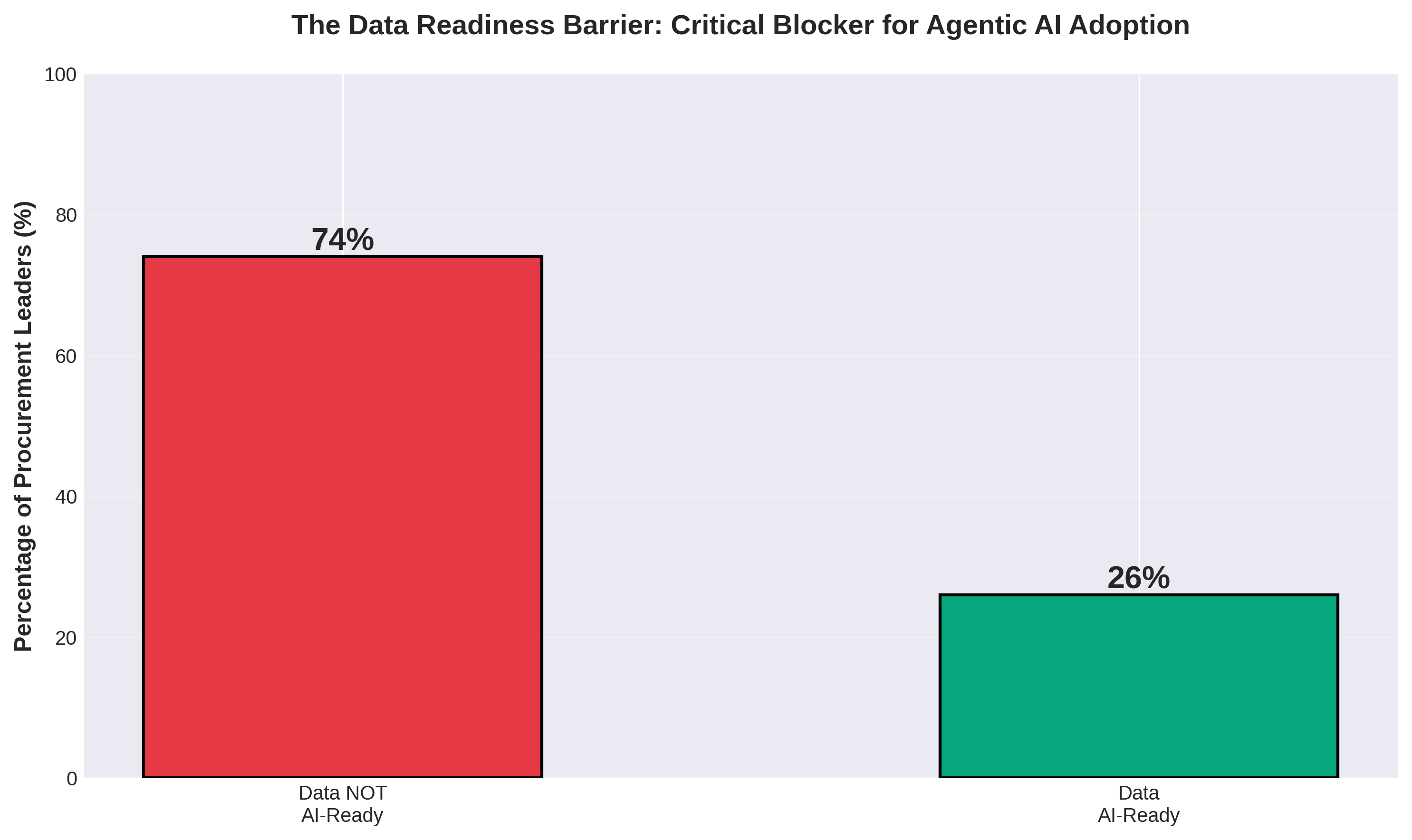
The primary obstacle to automating these processes is not the AI technology itself, but the underlying data infrastructure. Currently, 74% of procurement leaders state their organizational data is not "AI-ready" . Agentic AI requires clean, harmonized, and accessible data to function autonomously. Organizations must prioritize data governance before expecting reliable autonomous execution.
What to Keep Human: The Strategic Imperative
While AI systems are highly capable of discovery and processing, they cannot replicate empathy, build trust, or navigate complex ethical considerations. The contracts that close year after year are rarely initiated by an algorithm alone . The following areas must remain human-driven.
1. Supplier Relationship Management (SRM)
Supplier Relationship Management (SRM) is the strategic process of planning and managing all interactions with third-party vendors that supply goods or services to maximize the value of those interactions. SRM requires empathy, trust-building, and long-term vision. When supply chain disruptions occur, suppliers prioritize customers with whom they have strong personal relationships, not those who merely run the most efficient automated purchasing software.
2. Complex Negotiation Strategy
While AI can identify the optimal price point based on historical data, human judgment is required to execute complex negotiations. A human negotiator understands the nuance of a supplier's business pressures, can read the room, and knows when to trade a pricing concession for better payment terms or prioritized delivery during shortages.
3. Strategic Sourcing Decisions
Strategic sourcing decisions involve evaluating long-term market trends, geopolitical risks, and organizational goals to select primary partners. AI systems are limited by the public data they are trained on; they cannot evaluate a supplier's cultural fit, long-term stability, or unwritten industry reputation . Relying solely on AI for discovery risks homogenization, where every company uses the same algorithm to find and compete for the exact same "best-documented" suppliers.
The AI Homogenization Risk
When procurement teams outsource supplier discovery entirely to AI, they face the risk of uniformity. AI systems index publicly available data, meaning suppliers with limited digital footprints—often diverse, local, or innovative niche providers—are systematically skipped . Human intervention is required to look beyond the algorithm and discover suppliers that offer genuine competitive differentiation rather than just excellent digital marketing.
The Hybrid Model: A 2026 Implementation Framework
The most successful supply chain organizations in 2026 do not view AI as a replacement for human procurement professionals. Instead, they use the hybrid model.The hybrid procurement model is an operational framework where agentic AI handles data processing, initial discovery, and routine execution, while human professionals focus exclusively on relationship building, complex negotiation, and strategic decision-making.
Task Category | AI Agent Responsibility | Human Professional Responsibility |
Sourcing | Broad market scanning and initial supplier shortlisting | Evaluating cultural fit and conducting final partner selection |
Contracts | Extracting terms, summarizing risk, and drafting standard clauses | Negotiating complex terms and making final risk-acceptance decisions |
Performance | Tracking delivery metrics, SLA compliance, and flagging anomalies | Conducting quarterly business reviews and resolving escalated disputes |
Intake | Guiding stakeholders to preferred suppliers via chat interfaces | Managing complex, non-standard purchasing requirements |
To implement this model effectively, organizations must start by auditing their current procurement workflows. Identify the most time-consuming, data-heavy tasks and pilot agentic AI solutions there first. Simultaneously, retrain procurement staff to elevate their soft skills—negotiation, relationship management, and strategic thinking—ensuring they provide value where AI cannot.
Conclusion
The agentic procurement mandate is clear: automate for efficiency, but keep human for strategy. AI will not replace procurement professionals, but procurement professionals who use AI will inevitably replace those who do not. By embracing agentic AI for operational tasks, supply chain leaders can finally elevate their teams from tactical administrators to strategic business partners.


